
John Witherspoon
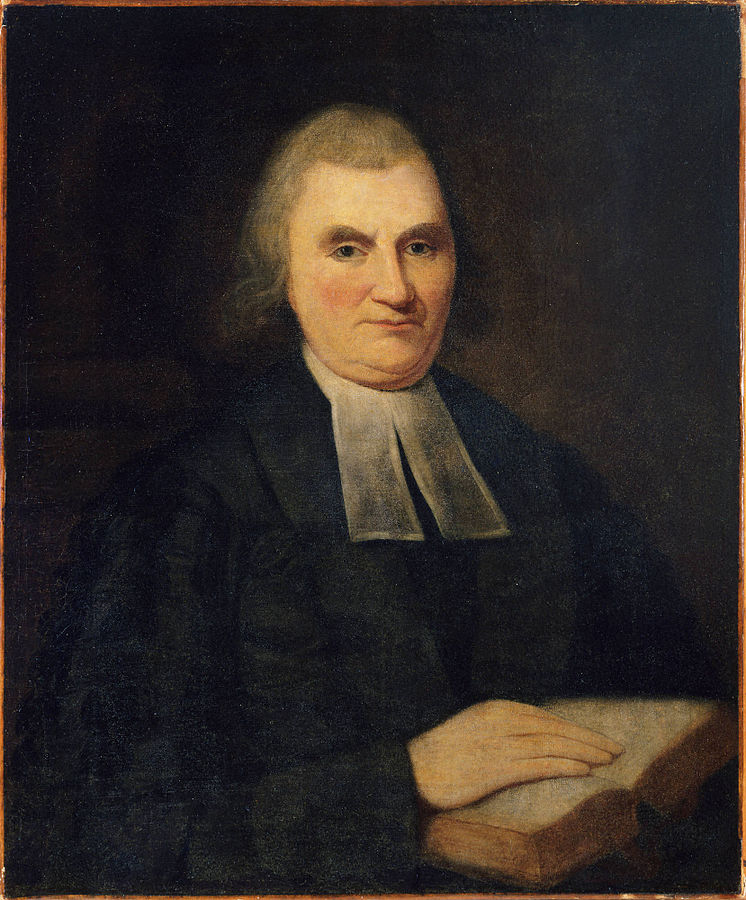
Princeton University. Property of the Trustees of Princeton University.
Painting by Charles Wilson Peale, American artist (1741-1827), Princeton University Art Museum
Princeton University. Property of the Trustees of Princeton University.
Painting by Charles Wilson Peale, American artist (1741-1827), Princeton University Art Museum

From an institutional perspective, the years from the 1760s through the 1790s were among the most traumatic and important in the College's history. They encompass such watershed events as the presidency of John Witherspoon; the Revolutionary War and the Battle of Princeton (which involved the occupation and liberation of Nassau Hall); Nassau Hall's use as the Capitol of the Continental Congress in 1783; and much more.
The arrival of John Witherspoon, an energetic Scots scholar recruited as President in 1768, marked a distinct upturn in the fortunes of the College. A good fund raiser -- then as now a requisite for Princeton Presidents -- Witherspoon soon placed the College on a firm financial footing. Witherspoon was equally successful as an educator, and he presided over the studies of some of the College's most notable graduates: James Madison , Aaron Burr, Jr., Philip Freneau , and "Light-horse Harry" Lee, among others.
Surprisingly, during his 25 years as President, Witherspoon constructed no buildings. Of course, the period from 1768 to 1794 was filled with upheaval, some of it indirectly Witherspoon's doing. A great advocate of independence from Britain, Witherspoon had signed the Declaration of Independence and represented New Jersey in the Continental Congress from 1776 to 1782.