
University Chapel
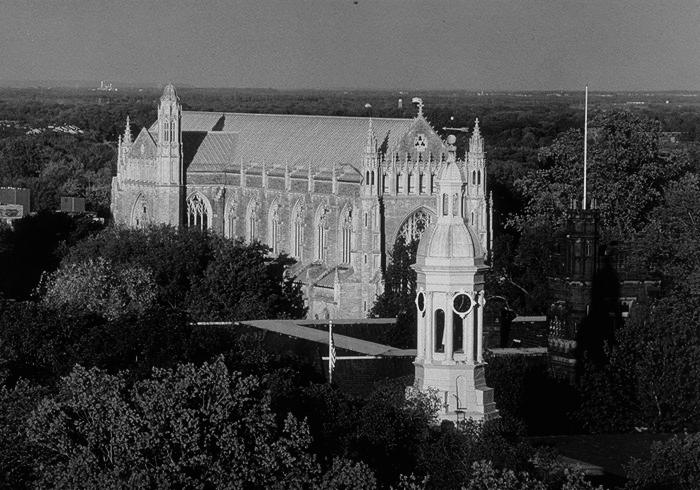
Princeton University. Property of the Trustees of Princeton University.
Source: Princeton University Archives, Mudd Library, Grounds & Buildings, LP2
Princeton University. Property of the Trustees of Princeton University.
Source: Princeton University Archives, Mudd Library, Grounds & Buildings, LP2

Klauder was financially constrained, and therefore stylistically restrained, in his design for Dickinson, the long contemplated northern extension of McCosh along Washington Road that was built in 1929-30. The new chapel, completed only two years before, had created an imposing counterpart to McCosh and it was obvious that the new classroom building should connect the two without competing visually with either. The resulting modest limestone structure created one of Princeton's signature spaces: the handsome quadrangle centered around the Mather Sundial.
Dickinson Hall also earned an additional footnote in Princeton's architectural history. A dispute involving the University, Cram, and Klauder over the Rothschild Arch (which connects the chancel of the chapel with the northern end of Dickinson) marked the end of Cram's relationship with Princeton. Objecting to what he considered a desecration of his chapel, Cram resigned as supervising architect in 1928.
The break had been brewing for some time, as Cram's demanding schedule (and difficult personality) had gradually strained relations between the architect and the university. But there is no denying Cram's lasting impact on Princeton. The leading proponent of the Collegiate Gothic style at Princeton and the architect of such landmarks as the Graduate College and the chapel, today's campus still bears his indelible stamp.