Princeton University. Property of the Trustees of Princeton University.
Source: Bric-a-Brac, 1938, p.197
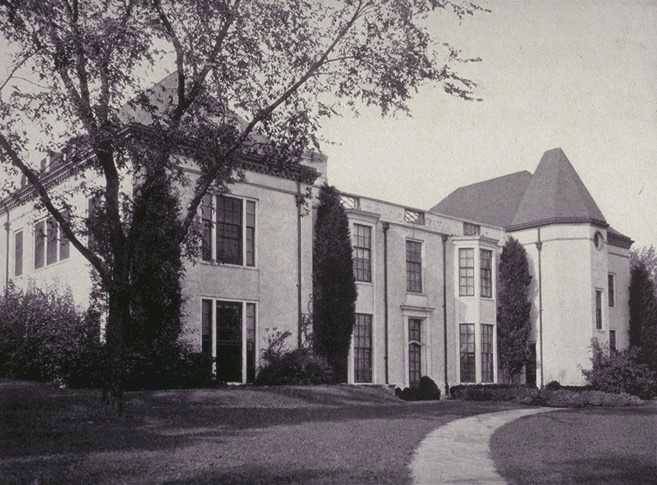
In 1935, the club occupied a new clubhouse, located on Ivy Lane next to Gateway Club. A mock French country chateau designed by J. Eugene Carroll, Arbor Inn with its distinctive turret and direct French influences resembles no other Princeton eating club building. Its precedents lie in domestic architecture of the period, which saw a number of prominent architects turn to French country houses as models for their wealthier clients.
Of the purpose-built clubhouses, it also saw the shortest service as a club. Despite relying on student waiters and making economies, reports William Selden, Class of 1934, Arbor had to fold in 1939 under the economic pressures of the Depression. The building was taken over and served as the headquarters for the School of Public and International Affairs, later the Woodrow Wilson School. It has since served a variety of academic and administrative tenants.


In 1935, the club occupied a new clubhouse, located on Ivy Lane next to Gateway Club. A mock French country chateau designed by J. Eugene Carroll, Arbor Inn with its distinctive turret and direct French influences resembles no other Princeton eating club building. Its precedents lie in domestic architecture of the period, which saw a number of prominent architects turn to French country houses as models for their wealthier clients.
Of the purpose-built clubhouses, it also saw the shortest service as a club. Despite relying on student waiters and making economies, reports William Selden, Class of 1934, Arbor had to fold in 1939 under the economic pressures of the Depression. The building was taken over and served as the headquarters for the School of Public and International Affairs, later the Woodrow Wilson School. It has since served a variety of academic and administrative tenants.
More information on Arbor Inn