The Princeton Triangle Club’s golden age was in the roaring twenties. Vaudeville as a public entertainment was at its peak. In the 1920’s, commercial radio was in its infancy. Movies were silent until 1929. Television would not be introduced to the public until after World War II. At that time in the Roaring 20’s, Triangle, with its campy male kick-line and variety format, was at the center of the public taste in entertainment.
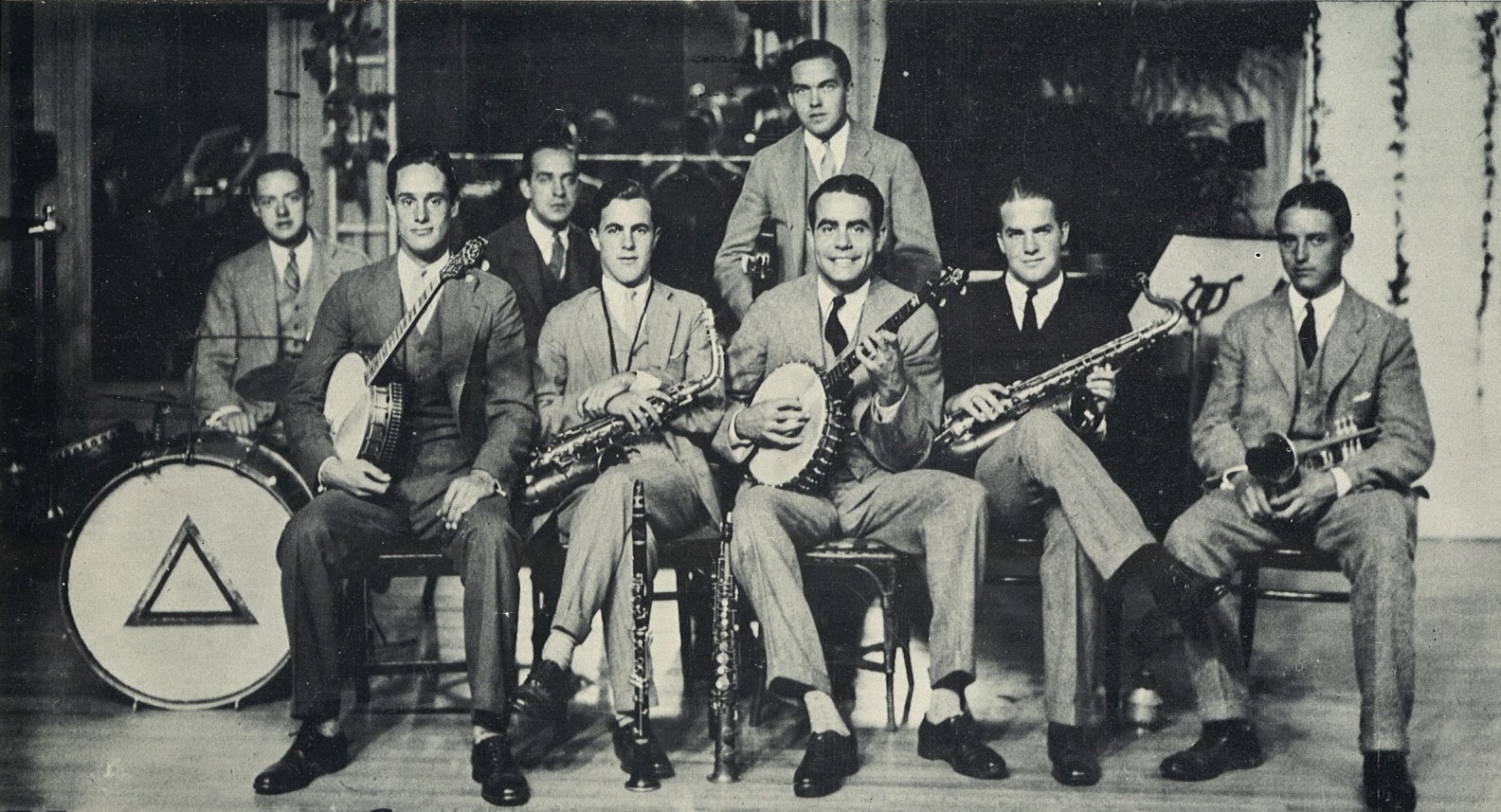
The members of the Triangle pit orchestra that wrote many of the show’s numbers formed a separate band in 1923 to be known as the Princeton Triangle Jazz Band to perform the songs from the shows on tours and for dance parties.
The Triangle Club Jazz Band embraced the Dixieland Jazz style that emerged from New Orleans around 1910. The Triangle Club Jazz band was influenced by a Bix Biderbecke, a self-taught cornet player from Davenport Iowa. Members of the Triangle Club Jazz Band were the same age as Bix Biderbecke and knew him personally. Biderbecke had agreed to sit in on a Columbia recording session but on the day of the recording was too intoxicated to perform. Biderbecke died of alcoholism related causes in 1931, not long before the last Columbia recording.
The Dixieland sound is created by a solo instrument playing the melody and the other instruments simultaneously improvise around the melody. This style creates a lively polyphonic spontaneous performance. Dixieland is the signature sound of the Gatsby Era. Dixieland gave way in the depression to the Swing Era with much larger touring stage bands, tightly arranged charts with more scripted and less improvisational solos. With Vaudeville out of fashion, the Swing Era commencing, and the Depression, the Triangle Club Jazz band ceased recording in 1932.


The Princeton Triangle Club’s golden age was in the roaring twenties. Vaudeville as a public entertainment was at its peak. In the 1920’s, commercial radio was in its infancy. Movies were silent until 1929. Television would not be introduced to the public until after World War II. At that time in the Roaring 20’s, Triangle, with its campy male kick-line and variety format, was at the center of the public taste in entertainment.
The members of the Triangle pit orchestra that wrote many of the show’s numbers formed a separate band in 1923 to be known as the Princeton Triangle Jazz Band to perform the songs from the shows on tours and for dance parties.
The Triangle Club Jazz Band embraced the Dixieland Jazz style that emerged from New Orleans around 1910. The Triangle Club Jazz band was influenced by a Bix Biderbecke, a self-taught cornet player from Davenport Iowa. Members of the Triangle Club Jazz Band were the same age as Bix Biderbecke and knew him personally. Biderbecke had agreed to sit in on a Columbia recording session but on the day of the recording was too intoxicated to perform. Biderbecke died of alcoholism related causes in 1931, not long before the last Columbia recording.
The Dixieland sound is created by a solo instrument playing the melody and the other instruments simultaneously improvise around the melody. This style creates a lively polyphonic spontaneous performance. Dixieland is the signature sound of the Gatsby Era. Dixieland gave way in the depression to the Swing Era with much larger touring stage bands, tightly arranged charts with more scripted and less improvisational solos. With Vaudeville out of fashion, the Swing Era commencing, and the Depression, the Triangle Club Jazz band ceased recording in 1932.