
Museum of Historic Art - 1890
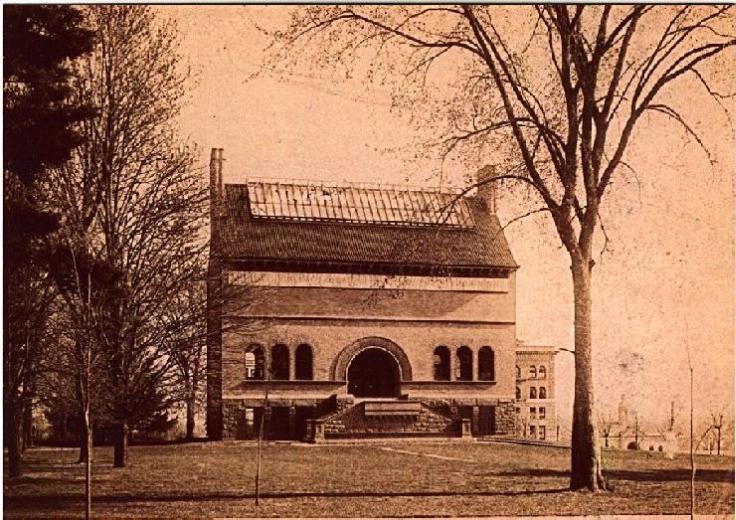
Princeton University. Property of the Trustees of Princeton University.
Source: Mudd Archives, Pach Bros Photo
Princeton University. Property of the Trustees of Princeton University.
Source: Mudd Archives, Pach Bros Photo

Indicative of McCosh's commitment to a well-rounded education was his enthusiastic support for one final academic building: an art museum to house the Department of Art and Archaeology. In 1882, an alumnus named William C. Prime promised to donate his famed collection of ceramics to the College -- provided that a suitable, fireproof building were built to house it. It took McCosh several years to mobilize the resources to construct such a building, but by 1887 he had commissioned a rising young architect named A. Page Brown to design the Museum of Historic Art. The Museum reflected both McCosh's interest in expanding the curriculum into new fields, including art, and also his desire to elevate the mind through the appreciation of beauty. Brown produced a solid Romanesque Revival building, scaled back from its initial plan but nonetheless appropriate for the size of the collection. The choice of the Romanesque style also cut down on costs; a polychromatic High Victorian Gothic building would have been far more expensive, as would a classically inspired structure made of marble.
Intended from the start as a teaching facility as well as a display space, the museum was located approximately on the site of the current Art Museum. With its neighbors Dod and Brown Halls, it helped form a cluster of Renaissance-influenced buildings on the east side of the campus.