Princeton University. Property of the Trustees of Princeton University.
Source: Bric-a-Brac, 1900, p.155
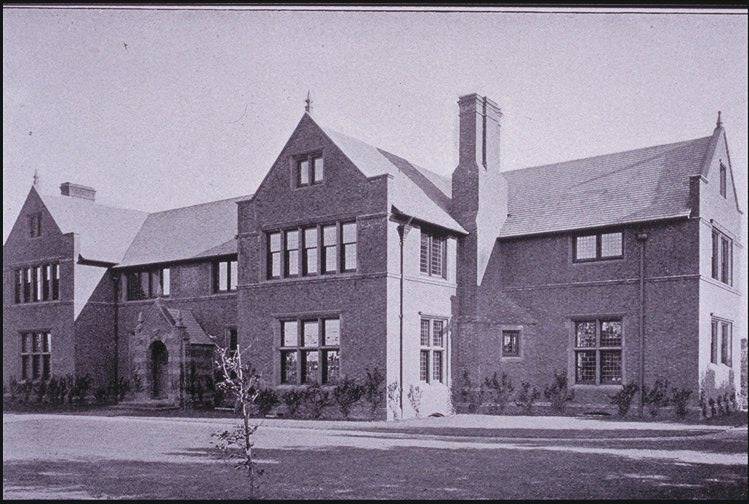
The facade, rendered in dark stone, is distinguished by two projecting bays, which frame the entrance. String courses help define the floors; the major decorative touches are found in the stonework around the entrance portico and in the leaded band windows.
Ivy's rear elevation, by contrast, is decidedly asymmetrical. A large, gambrel-roofed wing containing the dining room and kitchen projects to the south, while a larger dormer breaks up the massiveness of the central block. These details, combined with the terrace and gardens, give the rear elevation a far more informal and intimate appearance than the front.
At the time it was built, Ivy dwarfed all the other clubs, both in size and elegance. These points were not lost on the other eating clubs. Cope and Stewardson's magnificent design, and the sense of prestige it imparted, would embolden other clubs to try to emulate Ivy's grandeur in their own clubhouses.


The facade, rendered in dark stone, is distinguished by two projecting bays, which frame the entrance. String courses help define the floors; the major decorative touches are found in the stonework around the entrance portico and in the leaded band windows.
Ivy's rear elevation, by contrast, is decidedly asymmetrical. A large, gambrel-roofed wing containing the dining room and kitchen projects to the south, while a larger dormer breaks up the massiveness of the central block. These details, combined with the terrace and gardens, give the rear elevation a far more informal and intimate appearance than the front.
At the time it was built, Ivy dwarfed all the other clubs, both in size and elegance. These points were not lost on the other eating clubs. Cope and Stewardson's magnificent design, and the sense of prestige it imparted, would embolden other clubs to try to emulate Ivy's grandeur in their own clubhouses.